

PPE Buying Guide by Industry: What Your Business Needs and How to Buy It
Buying PPE sounds simple until a glove tears, a mask leaks, or an inspector asks how you chose your gear. Whether you are buying for a small team or managing recurring orders across several departments, the first step is the same: match each product to the hazards your workers actually face.
This PPE buying guide by industry shows what each type of workplace commonly needs, which rules to check, and how to order the right amounts. It covers healthcare, construction, manufacturing, food service, cleaning, automotive, and laboratory work. Want to skip ahead? See what we sell.
The right PPE depends on the hazards in your industry, not on a one-size-fits-all list. Healthcare needs exam gloves and the right respirators. Construction needs head, eye, hearing, and dust protection. Food service needs single-use gloves. Labs and cleaning crews need eye protection and gloves matched to their chemicals. Start with a hazard assessment, then match gear to each task.
This guide is general information, not legal advice. Rules vary by state and by task, so confirm what applies to you. We sell NIOSH-approved N95 masks and nitrile gloves, so we point out where those fit and where you need other gear from a safety supplier.
Common PPE Considerations by Industry

Use this table for a quick view of personal protective equipment by industry. It is a starting point, not a legal checklist. Your own hazard assessment decides what each job needs.
| Industry | Main hazards | Common PPE | Rules and standards to check |
|---|---|---|---|
| Healthcare | Blood, body fluids, airborne germs | Exam gloves, gowns, eye or face protection, masks, respirators when required | OSHA Bloodborne Pathogens (1910.1030), Respiratory Protection (1910.134) |
| Construction | Falls, falling objects, debris, noise, dust | Hard hat, safety glasses, high-visibility clothing, hearing protection, work gloves, safety boots, respirators for some dust tasks | OSHA 29 CFR 1926 Subpart E |
| Manufacturing | Machines, noise, sparks, chemicals, dust | Safety glasses, hearing protection, work gloves, safety shoes, respirators by hazard | OSHA 29 CFR 1910 Subpart I, Hearing Conservation (1910.95) |
| Food service | Germs spreading to food, cuts, hot surfaces | Single-use gloves, hair restraints, aprons, cut-resistant gloves for slicing | FDA Food Code and your local health rules |
| Cleaning and janitorial | Chemicals, germs, splashes, dust | Gloves matched to products, eye protection, aprons, dust protection | OSHA Hazard Communication (1910.1200) |
| Automotive | Oil, solvents, sharp metal, noise, dust, paint spray | Heavy-duty gloves, safety glasses, hearing protection, safety shoes, respirators by task | OSHA 29 CFR 1910 Subpart I |
| Laboratory | Chemical splashes, samples, glass | Lab coat, goggles, gloves matched to chemicals | OSHA Laboratory Standard (1910.1450) |
Three Rules to Follow Before Buying PPE

- PPE is the last line of defense: OSHA uses a "hierarchy of controls." In order, it goes: remove the hazard, swap it for a safer one, use engineering controls (like better airflow), use work rules, and then use PPE. A fume hood or a machine guard comes before a mask or glove.
- Do a hazard assessment first: OSHA's PPE standard, 29 CFR 1910.132, says employers must assess the workplace to find hazards that need PPE. Walk through each job, list what can hurt your people, and pick gear for each hazard. Write it down.
- Employers usually pay: In most cases, PPE that OSHA or your hazard assessment requires must be provided at no cost to workers. Replacements are covered too, unless the worker lost it or damaged it on purpose. A few items are excepted, such as everyday clothing and some personal items.
PPE Buying Guides by Industry
Use the sections below as your industry-specific PPE guide. Where we have a deeper guide on our site, we link to it.
Healthcare PPE
Healthcare workers face blood, body fluids, and germs that travel through the air. Clinics, dental offices, long-term care homes, and urgent care centers all fall here.
What most teams need:
- Exam gloves for patient contact
- Gowns for splash risks
- Eye or face protection
- Surgical masks for a looser barrier
- NIOSH-approved N95 respirators where an appropriate particulate respirator is required and your hazard assessment calls for one
Rules to know:
- OSHA's Bloodborne Pathogens standard covers contact with blood and body fluids, and PPE under it is provided at no cost to workers.
- The FDA regulates exam gloves as medical devices. For patient care, choose gloves labeled for exam use.
- Handling chemotherapy drugs requires gloves tested and labeled for that use. A regular exam glove is not enough.
- If your workplace requires respirators, OSHA's Respiratory Protection standard calls for a written program, a medical evaluation, fit testing, and training.
- Need fluid resistance in an N95? Check the NIOSH Certified Equipment List before you order.
Buyer tipA NIOSH-approved N95 is a respirator designed to seal to the face and filter at least 95 percent of tiny test particles. It does not guarantee protection against any illness.
Go deeper: Healthcare Buyer's Guide to Disposable Nitrile Examination Gloves, exam-grade vs. industrial-grade nitrile gloves, and our flu season mask guide.
Construction PPE
Job sites have falling objects, flying debris, loud tools, and dust. Falls are a major risk too.
What most crews need:
- Hard hats (look for ANSI/ISEA Z89.1)
- Safety glasses or goggles (ANSI/ISEA Z87.1)
- High-visibility vests or jackets (ANSI/ISEA 107)
- Hearing protection
- Work gloves matched to the task
- Safety-toe boots
- Fall protection for work at height
- A respirator when the task creates a breathing hazard
Rules to know:
- OSHA's construction PPE rules are in 29 CFR 1926 Subpart E.
- A rule that took effect January 13, 2025 says construction employers must provide PPE that fits each worker. That is a good reason to stock more than one size.
Buyer tipA disposable N95 may suit some general dust tasks if your hazard assessment supports it. It is not a universal construction respirator. Silica, asbestos, and lead work have their own OSHA rules, and those rules may call for a different respirator. Check them before you rely on a disposable mask.
Manufacturing and Industrial PPE
Industrial PPE covers a wide range because factories differ so much. A packaging line and a metal shop have very different hazards.
What most teams need:
- Safety glasses or goggles
- Hearing protection, because OSHA's hearing conservation rules start when noise averages 85 decibels over an 8-hour shift
- Work gloves, such as cut-resistant gloves for sharp parts
- Safety shoes
- A respirator chosen for the dust, fumes, or vapors in the area
Buyer tips:
- Assess each department separately. Welding, spray finishing, sanding, and chemical mixing each need their own plan.
- Welding fumes, spray paint, and chemical vapors need a different respirator than a disposable N95.
- For ordering across departments or on a schedule, see our PPE procurement guide.
What PPE Does Food Service Need?
Food service PPE protects the food as much as the worker. A glove that tears or gets dirty can spread germs.
What most teams need:
- Single-use gloves
- Hair restraints
- Clean aprons
- Cut-resistant gloves for slicing (worn under a single-use glove)
- Non-slip shoes
Rules to know:
- The FDA Food Code limits bare hand contact with ready-to-eat food. Your local health department enforces its own version.
- Gloves do not replace handwashing. Wash first, then glove up.
- Change gloves when they tear, get dirty, or when you switch tasks, such as raw chicken to salad.
- Use gloves labeled for food contact. Not every nitrile glove has that wording.
Go deeper: nitrile vs. latex vs. vinyl gloves and powdered vs. powder-free nitrile gloves.
Cleaning and Janitorial PPE
Janitorial PPE has to match the products on the cart. Cleaning crews handle strong products, dirty surfaces, and dust.
What most crews need:
- Gloves that match the cleaning products
- Eye protection for splashes
- Aprons
- Dust protection where the task creates dust (an N95 helps with dust, not with fumes)
- Non-slip shoes
Rules to know:
- OSHA's Hazard Communication Standard means each product needs a safety data sheet (SDS). The SDS lists the right PPE.
- Read the product label. Never mix cleaning products.
Buyer tipA thicker nitrile glove is a common pick for heavy cleaning. Our 6 mil black nitrile gloves are listed as heavy-duty. Check the product page for exact labeling. Gloves protect hands, not lungs.
Automotive PPE

Mechanics work with oil, grease, solvents, sharp metal, and loud tools. Body shops add dust and paint spray.
What most shops need:
- Heavy-duty gloves
- Safety glasses or goggles
- Hearing protection
- Safety shoes
- A respirator matched to the task
Buyer tips:
- Some brake cleaners and solvents can pass through thin nitrile fast. Check the SDS and change gloves after a splash.
- An N95 can help with sanding dust. Spray painting needs a cartridge or supplied-air respirator, not an N95.
- Black gloves hide grease, but color does not decide the grade. Read the label. Our guide to exam-grade vs. industrial-grade nitrile gloves explains how.
Laboratory PPE
Labs deal with chemical splashes, biological samples, and glass.
What most labs need:
- Lab coats
- Splash goggles (and a face shield for bigger splash risks)
- Gloves chosen for the chemicals in use
- Closed-toe shoes
Rules to know:
- OSHA's Laboratory Standard (1910.1450) requires a Chemical Hygiene Plan for covered labs.
- Thin disposable gloves are for splash contact, not soaking. If a chemical splashes on a glove, take it off and replace it.
- Check the glove maker's chemical chart and the SDS before you use a glove with any chemical.
Buyer tipFume hoods and good ventilation come first. An N95 does not protect against gases or vapors.
How to Buy PPE for Your Business: 8 Steps

Use these steps as a simple business PPE buying guide, whether you buy once or on a schedule.
- Assess each job. List hazards by task, not by company.
- Use other controls first. Fix what you can at the source.
- Build a PPE list for each role. A nurse, a cook, and a mechanic need different kits.
- Check labels and standards. Look for ANSI marks on eye and head gear, ASTM on gloves, and NIOSH approval on respirators.
- Plan for fit. Offer several sizes. Offer more than one mask shape if you can. Poor fit is a common reason people stop wearing PPE.
- Calculate your quantity. Use the formula in the next section.
- Compare total delivered cost. Unit price is only part of the story.
- Train, store, and inspect. Teach workers how to wear, store, and replace each item. Replace anything damaged.
How Much PPE Should You Order?
Use this formula:
The formulaPeople who use the item × units per person per day × days you want to stock = units needed
Here are two examples for illustration only. They are not recommended usage rates. Your numbers will depend on your tasks, your policies, and how often people change gear.
- If 25 employees each use 2 pairs of gloves per day for 20 workdays, you need 1,000 pairs before any extra stock.
- If 10 employees each use 1 mask per day for 20 workdays, you need 200 masks before any extra stock.
Then round your requirement up to the pack, case, or pallet sizes your supplier offers. For how boxes, cases, and pallets differ, read our N95 case quantity guide.
Compare total delivered cost
Add the order price and the shipping. Then divide by the number of masks or gloves. Two orders with the same unit price can cost very different amounts once shipping, minimums, and payment terms are included.
How to Check a PPE Supplier
Run through this list before a bulk order, especially with a new supplier.
- The listing names the manufacturer, not just a brand.
- N95 masks show a TC number you can match on the NIOSH Certified Equipment List. The manufacturer and model must match too.
- Gloves list the material, powder-free status, and the standard.
- The price is clear per mask or per glove.
- You can get a quote for large or recurring orders.
A real-looking TC number alone does not prove a mask is genuine. Our NIOSH-approved vs. counterfeit N95 checklist walks through each check.
6 PPE Buying Mistakes to Avoid
- Buying on price alone. A cheap glove that rips can cost more in the end.
- Skipping the hazard assessment. You cannot pick the right gear for hazards you have not listed.
- Treating an N95 as a cure-all. It filters particles only. It does not stop gases or vapors.
- Ignoring fit. The wrong size or shape leaves gaps.
- Not verifying NIOSH approval. A mistake on a pallet is hard to fix.
- Buying more than you can store or use. Match orders to real usage.
Where Hakeem PPE Fits
We focus on two product lines: NIOSH-approved N95 respirators and powder-free nitrile gloves. They suit the respiratory and hand-protection parts of the industries above. We do not sell hard hats, safety glasses, hearing protection, or fall gear, so source those from a safety supplier.
| Your need | What we offer |
|---|---|
| Particle protection for tasks where an N95 is appropriate | Benehal black N95 and white N95 foldable respirators |
| A cup-style shape for comfort | Zhong Yi cup-style N95 |
| Exam-style gloves for clinics, kitchens, and detail work | Kingfa blue nitrile gloves (below) |
| Heavy-duty gloves for cleaning, auto, and shop work | Kingfa 6 mil black nitrile gloves (below) |
The Benehal N95 respirator lists NIOSH approval number TC-84A-7447, and you can match it on the NIOSH Certified Equipment List. Check price, stock, and labeling details on each product page before you order.
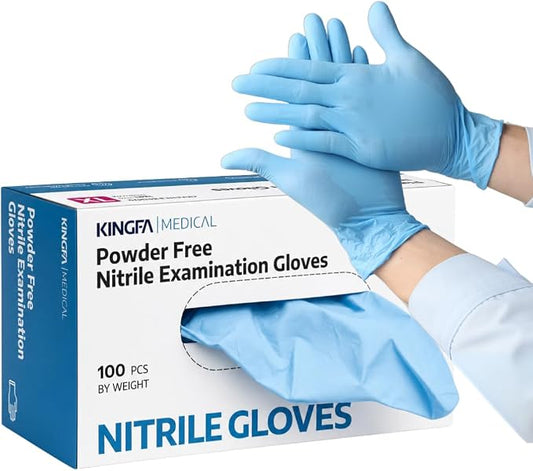
A lighter exam-style glove for detailed work. See the product page for its labeling and clearance details.
Shop Blue Gloves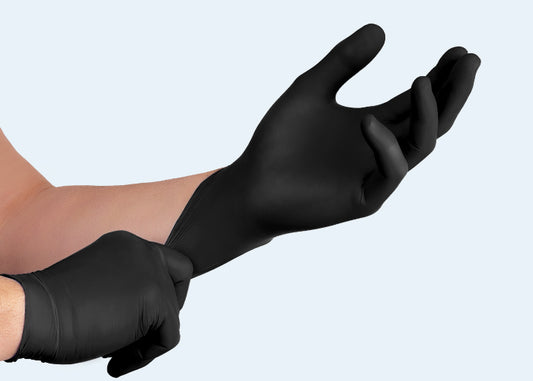
A heavy-duty 6 mil glove for tougher jobs. See the product page for its exact labeling.
Shop Black GlovesNeed PPE for a larger team?
Shop N95 respirators and nitrile gloves, or book a meeting to plan larger and recurring orders.
Frequently Asked Questions
What PPE do I need for my industry?
Start with a hazard assessment of each job. List what can hurt your workers, such as splashes, noise, dust, or sharp tools. Then match gear to each hazard. A hospital, a kitchen, and a job site need very different PPE, so use the industry sections above as a starting point.
What are the main types of PPE?
Common types are head protection, eye and face protection, hearing protection, hand and arm protection, foot and leg protection, body protection, and respiratory protection. Most jobs need a mix. The right mix depends on the hazards.
What PPE is required on a construction site?
It depends on the hazards of each task. Common items are hard hats, safety glasses, hearing protection, work gloves, safety footwear, high-visibility clothing, and fall protection. OSHA's construction rule also says PPE must fit each worker. Dust, silica, or lead work may need a respirator.
What PPE do healthcare workers need?
It depends on the task. Common items are exam gloves, gowns, eye or face protection, and masks or respirators. OSHA's Bloodborne Pathogens standard covers contact with blood and body fluids. Follow your facility's infection-control program and your state rules.
Who pays for PPE at work?
In most cases, the employer. OSHA requires employers to provide required PPE at no cost to workers and to replace it when it wears out. Limited exceptions include everyday clothing, ordinary weather gear, and some personal items, such as safety-toe shoes or prescription safety glasses a worker may wear off the job. Check your state rules too.
Does OSHA require a written PPE program?
OSHA requires employers to assess hazards, choose PPE, and train workers. It also expects written certification that the hazard assessment was done. When respirators are required, a separate written respiratory program is needed. Rules differ by state, so check yours.
What PPE is needed for food service?
Food workers mainly need single-use gloves, hair restraints, and clean aprons. The FDA Food Code limits bare hand contact with ready-to-eat food. Gloves do not replace handwashing. Change them when they tear, get dirty, or when you switch tasks. Local health rules may add more.
Will an N95 protect me from chemical fumes?
No. An N95 filters particles. It does not protect against gases or vapors. Chemical vapors need a respirator with the right cartridge for that chemical. Spray painting, strong solvents, and some cleaning products fall into this group.
How much PPE should my business buy?
Multiply the number of daily users by the units each person uses per day, then by the days you want to cover. For example, 25 people using 2 pairs of gloves a day for 20 workdays need 1,000 pairs. Round up to your supplier's pack sizes, and compare total delivered cost.
- OSHA: PPE General Requirements, 29 CFR 1910.132
- OSHA: Respiratory Protection, 29 CFR 1910.134
- OSHA: Personal Protective Equipment in Construction
- NIOSH Certified Equipment List
- FDA: Medical Gloves
- FDA Food Code
Last updated: October 2026. Written by the Hakeem PPE Team.