

Exam-Grade vs. Industrial-Grade Nitrile Gloves: How to Choose
Exam-grade and industrial-grade nitrile gloves look almost the same in the box. But they are tested, labeled, and regulated differently, and the wrong choice can cost you money or put people at risk. This guide shows the real difference, when to use each, and how to read a glove box before you buy. Want to skip ahead? See our nitrile gloves.
Exam-grade nitrile gloves are FDA-regulated medical devices made for patient care and contact with body fluids. Industrial-grade nitrile gloves are made for general work like auto repair and cleaning and are not intended or labeled for medical exam use. An exam glove can do an industrial job, but not the other way around.
At a Glance
Better suited toPatient care, exams, and tasks with blood or body fluids
Keep in mindOften thinner, so it may tear sooner on rough jobs
Better suited toAuto repair, cleaning, shop work, and light manufacturing
Keep in mindNot intended or labeled for medical exam use
Better suited toRough, greasy, or sharp jobs that tear thin gloves
Keep in mindThick does not mean exam grade. Check the label.
| Exam grade | Industrial grade | |
|---|---|---|
| FDA status | Regulated medical device (510(k)) | Not sold as a medical exam glove |
| Made for | Patient care and infection control | General work, repairs, cleaning |
| Standard | ASTM D6319 for nitrile | Varies by maker |
| Pinhole quality (AQL) | 2.5 or lower | Often higher, set by the maker |
| Typical thickness | Often thinner for better feel | Often thicker for durability |
| Powder | Powder-free | Usually powder-free |
| Medical exam use | Yes, if labeled for it | No |
| Industrial use | Yes | Yes |
Exam Grade vs. Industrial Grade Nitrile Gloves: What Is the Difference?

What are exam grade nitrile gloves?
Exam grade nitrile gloves are disposable gloves made for medical use. The FDA regulates medical gloves as Class I medical devices, and they need a 510(k) premarket notification before sale in the U.S. The box must also list the glove material.
- They follow ASTM D6319, the standard for nitrile examination gloves.
- They are tested for tiny holes and must meet a pinhole limit, called an AQL, of 2.5 or lower.
- They are powder-free. The FDA banned powdered surgeon's gloves and powdered patient exam gloves in 2017. That rule covers those glove types, not every glove on the market. See Powdered vs. Powder-Free Nitrile Gloves.
Exam-grade gloves are also called medical-grade or examination gloves.
What are industrial grade nitrile gloves?
Industrial-grade nitrile gloves, also called general-purpose gloves, are made for work outside of patient care. They are built for everyday hazards like oil, dirt, and rough surfaces.
- They are not sold or labeled as medical exam gloves.
- The pinhole limit is often looser. Many sellers list about 4.0, but each maker sets its own level.
- Many are thicker, and many come in black or other colors that hide grease.
Are industrial nitrile gloves medical grade?
No. General purpose and industrial nitrile gloves are not intended or labeled for medical exam use. Only use a glove for patient exams or contact with blood or body fluids if that specific product is labeled for that use and has the required FDA medical device clearance.
Two limits to rememberHandling chemotherapy drugs needs gloves tested to a separate standard, ASTM D6978, and labeled for that use. A regular exam glove is not enough. Also, never wash, disinfect, or reuse disposable gloves.
What AQL meansAQL stands for Acceptable Quality Level. Workers fill sample gloves with water and check for leaks. A lower number means fewer leaks are allowed. It is a batch test, not a promise that every single glove is perfect, so still check gloves before you use them.
Nitrile Gloves for Medical Use vs. Industrial Use

Nitrile gloves for medical use
Nitrile gloves for medical use should be labeled as exam or examination gloves. They are the usual choice for:
- Clinics, dental offices, and urgent care
- Nursing and long-term care
- Labs
- Anyone who needs a latex-free medical glove. The FDA lists nitrile as an option for people with a latex allergy.
Look for the words "exam," "powder-free," and "ASTM D6319." Ask your supplier for the 510(k) details if you need them for compliance. For a full buying guide, read our Healthcare Buyer's Guide to Disposable Nitrile Examination Gloves.
Nitrile gloves for industrial use

Nitrile gloves for industrial use work well for:
- Auto repair and mechanic work
- Cleaning and janitorial jobs
- Painting and light chemical tasks
- Assembly and manufacturing
- Landscaping and general shop work
Industrial gloves are often thicker and built for rough jobs. Price varies by brand, thickness, and box size, so compare the cost per glove. You can also use an exam glove for these tasks. It just may be thinner than you want for very rough work.
Which nitrile gloves should you choose for your job?
| Your job | Better fit |
|---|---|
| Exams, dental, clinic work | Exam grade |
| Touching blood or body fluids | Exam grade |
| Tattoo, salon, or spa work | Exam grade is a common pick |
| Food prep | Exam or industrial, if labeled food safe |
| Auto repair and mechanic work | Industrial or heavy duty |
| General cleaning | Either one |
| Light chemical splash tasks | Check the safety data sheet and glove chart first |
| Mixed jobs | Exam grade covers the most ground |
Not sure about the material? Our nitrile vs. latex vs. vinyl comparison covers that.
Nitrile Glove Thickness, Durability, and Color

Nitrile glove thickness: does thicker mean better?
Thickness is measured in mils. One mil is one thousandth of an inch. Many exam gloves are in the 3 to 5 mil range, and many heavy-duty nitrile gloves are 6 mil or more. Ranges vary by maker, so check the box.
- Thinner gloves give better touch and feel.
- Thicker gloves usually hold up better against rips and rough surfaces.
A common mythThick does not mean exam grade, and thin does not mean weak. A 6 mil glove can be industrial or exam. The grade comes from the testing and the label, not the thickness.
Nitrile glove durability
Nitrile is known for good puncture resistance and holds up well to oils and grease. To get the most from any disposable glove:
- Pick the right size. Gloves that are too tight tear sooner.
- Change gloves when they rip, get dirty, or when you switch tasks.
- Store boxes away from heat and sunlight.
Black vs. blue nitrile gloves
Color does not decide the grade. Blue gloves are common in kitchens and clinics because blue rarely appears in food, so a torn piece is easy to spot. Black gloves are popular in auto shops because they hide grease. Either color can be exam grade or industrial grade, so read the label, not the color.
Nitrile Glove Chemical Resistance: What You Need to Know
This is the part buyers get wrong most often. Nitrile is not one-size-fits-all for chemicals. It handles many oils, greases, and some acids and bases. But it can fail fast against some chemicals, such as ketones, strong oxidizing acids, and some aromatic solvents.
How long it takes for a chemical to get through the glove.
The chemical passing through the glove at a tiny, molecular level, even with no hole.
The glove swelling, softening, or breaking down from contact with the chemical.
Breakthrough time gets shorter with thinner gloves, heat, stretching, and movement. Thin disposable gloves are made for splash contact, not soaking. If a chemical splashes on your glove, take it off and replace it right away.
Neither grade means chemical proofA glove's grade tells you about medical quality, not chemical safety. For any chemical, confirm the specific glove with the maker and follow the chemical's safety data sheet (SDS).
How to check a glove for a chemical
- Read the chemical's safety data sheet (SDS).
- Find the glove maker's chemical resistance chart.
- Match the glove to the chemical, thickness, and contact time.
- For long contact or harsh chemicals, use a glove made for chemical work, not a disposable one.
OSHA requires employers to assess hazards and choose matching hand protection. See OSHA 29 CFR 1910.138.
Which nitrile gloves are best for chemicals and mechanic work?
There is no single best glove. For light cleaning products and short splashes, a thicker nitrile glove is often a good start. For strong solvents or long contact, look for a glove rated for that exact chemical.
Mechanics deal with oil, grease, and sharp edges, so a heavy duty black nitrile glove is a popular pick. It resists oil, hides dirt, and holds up to tools. Some fuels, brake cleaners, and solvents can pass through thin nitrile quickly, so check the SDS and swap gloves after a splash.
Gloves protect your hands, not your lungs. For dusty jobs, see our N95 masks.
How to Choose Nitrile Gloves: 5 Simple Steps

- Name the job. Patient care or contact with body fluids calls for exam-grade gloves. Repairs, cleaning, or shop work may only need industrial-grade gloves.
- Check the rules. Healthcare, dental, and many workplaces require exam gloves. Follow your facility's policy.
- List the hazards. Oils, sharp edges, and chemicals change which thickness and glove you need.
- Pick thickness for the task. Thin for feel. Thick for toughness.
- Compare cost per glove. A cheap glove that rips can cost more in the long run.
How to read a glove box
Look for "exam" or "examination" if you need medical use. If the box only says "disposable nitrile gloves" or "general purpose," treat it as industrial until the seller shows medical documents.
ASTM D6319 is the standard for nitrile exam gloves.
The usual choice for nearly every job.
Thicker gloves can offer more durability, while thinner gloves offer more touch sensitivity.
A lower number generally means fewer allowed pinhole defects.
If the gloves will touch food, look for food-safe wording. Not every nitrile glove has it.
Cost per glove: how the math works
Do not just look at the box price. Divide the price by the number of gloves. Here are our current options. Prices checked September 2026.
| Glove | Count | Price | Per glove |
|---|---|---|---|
| Kingfa Blue Nitrile Exam Gloves | 100 | $13.00 | $0.13 |
| Kingfa Blue Nitrile Exam Gloves | 1,000 | $80.00 | $0.08 |
| Kingfa 6 Mil Black Nitrile Gloves | 100 | $15.00 | $0.15 |
| Kingfa 6 Mil Black Nitrile Gloves | 1,000 | $90.00 | $0.09 |
Confirm the current price and stock on the product page before you order.
Shop Disposable Nitrile Gloves at Hakeemippe
Our disposable nitrile gloves collection has powder-free, latex-free options in bulk sizes for clinics, kitchens, cleaning crews, and shops.
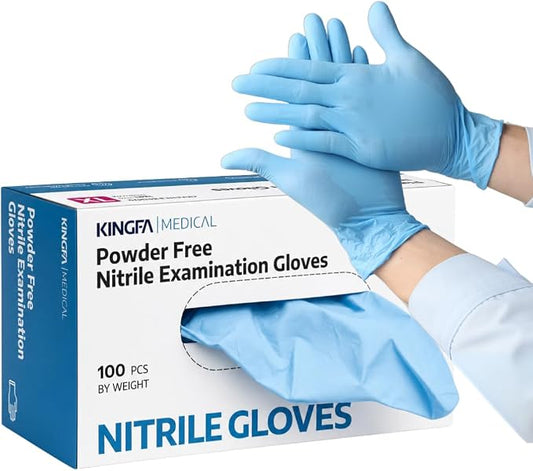
A lighter exam-style glove for detailed work. See the product page for its labeling and clearance details.
Shop Blue Gloves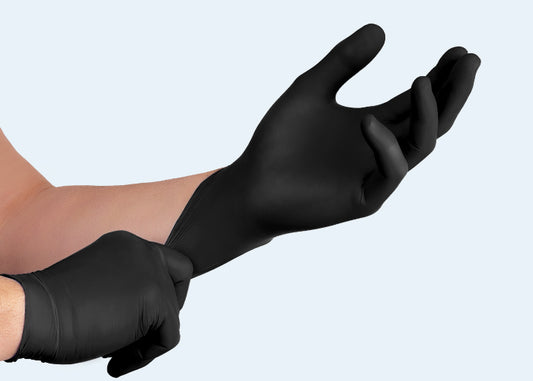
A heavy duty 6 mil glove for tougher jobs. See the product page for its exact labeling.
Shop Black GlovesBuying for a team? Choose a 1,000-glove box in blue or black, or read our bulk PPE guide.
Ready to choose the right nitrile gloves?
Shop powder-free, latex-free nitrile gloves, or talk to us about your team's bulk needs.
Frequently Asked Questions
What is the difference between exam grade and industrial grade nitrile gloves?
Exam gloves are FDA-regulated medical devices tested for patient care. Industrial gloves are made for general work and are not intended or labeled for medical exam use. The gloves may look similar, but the labeling, testing, and intended use differ.
Are industrial grade nitrile gloves medical grade?
No. Industrial nitrile gloves are not intended or labeled for medical exam use. Only use a glove for patient exams or contact with body fluids if that specific product is labeled for that use and has the required FDA medical device clearance.
Can I use exam gloves for industrial work?
Yes. Exam gloves work for many industrial tasks like cleaning, food prep, and light repairs. They may be thinner than heavy-duty gloves, so pick a thicker glove for rough jobs.
Which is thicker, exam or industrial nitrile gloves?
Industrial gloves are often thicker, but not always. Thickness does not decide the grade. Check the mil rating and the box label.
Are nitrile gloves chemical resistant?
Nitrile resists oils, greases, and many other substances, but not every chemical. Results depend on the glove, its thickness, the chemical, and how long contact lasts. Check the maker's chemical chart and the safety data sheet.
Are heavy duty nitrile gloves better than exam gloves?
They are better for tough, rough jobs because they are usually thicker and more durable. That does not make them medical gloves. For patient exams, use gloves labeled and cleared for that use.
Are black nitrile gloves medical grade?
Not because of the color. A black glove is medical grade only if the box says it is an exam glove and it has the required labeling. Otherwise, treat it as a general-purpose or heavy-duty glove.
Which nitrile gloves are best for mechanics?
A heavy-duty black nitrile glove is a popular choice. It resists oil and grease and holds up to tools. Check the safety data sheet for brake cleaners and solvents, since some can pass through thin nitrile.
What does AQL mean on a glove box?
AQL means Acceptable Quality Level. It is a batch test for tiny pinhole leaks. A lower number generally means fewer allowed defects. It does not guarantee that every single glove is free of holes.
Can you reuse disposable nitrile gloves?
No. The FDA says never to wash, disinfect, or reuse medical gloves. Use a fresh pair for each task and throw them away afterward.
Still not sure which glove fits your team? Book a meeting, and we will help you compare.
- FDA: Medical Gloves
- OSHA: Hand Protection, 29 CFR 1910.138
- Kimberly-Clark: Nitrile Gloves Chemical Resistance Guide (hosted by UAB)
- ASTM D6319, Standard Specification for Nitrile Examination Gloves for Medical Application
Written by the Hakeem PPE Team.