

Nitrile vs. Latex vs. Vinyl Gloves: Full Comparison
Nitrile gloves are a versatile choice for many jobs. They offer good puncture resistance, hold up well to oils, and contain no natural latex. Latex gloves offer the best stretch and feel but can cause allergies. Vinyl gloves cost the least and suit short, low-risk tasks.
At a Glance
Better suited toOils, sharp edges, and latex allergy concerns
Keep in mindCosts more than vinyl and stretches less than latex
Better suited toFine, detailed work where no one has an allergy
Keep in mindCan cause allergic reactions and is weak against oils
Better suited toShort, low-risk tasks on a budget
Keep in mindLooser fit and lower puncture resistance
| Nitrile | Latex | Vinyl | |
|---|---|---|---|
| Made from | Synthetic rubber | Natural rubber | PVC plastic |
| Latex-free | Yes | No | Yes |
| Fit and stretch | Snug, less stretch than latex | Excellent stretch | Looser, little stretch |
| Touch sensitivity | Very good | Excellent | Lower |
| Puncture resistance | High | Moderate to good | Low |
| Oil and grease resistance | Good | Poorer | Limited |
| Chemical resistance | Depends on the chemical | Depends on the chemical | Limited |
| Typical cost | Medium | Low to medium | Lowest |
| Common uses | Medical, cleaning, auto, food, tattoo | Fine-touch work where no one has an allergy | Short, low-risk tasks |
What Are the Main Types of Disposable Gloves?

Nitrile gloves are made from a synthetic rubber. Because they are man-made, they have no natural latex. That is why "latex-free disposable gloves" often points to nitrile first.
Latex gloves are made from natural rubber from rubber trees. They stretch a lot and feel very natural on the hand. But some people are allergic to the proteins in natural rubber latex.
Vinyl gloves are made from PVC, a plastic, with added softeners called plasticizers. They cost the least, but they fit looser and are less durable than the other two.
Other types include neoprene, polyurethane, and polyethylene (PE) gloves. We cover those near the end.
Pros and Cons
Nitrile
- No natural latex
- Strong against punctures
- Good with oils and greases
- Snug fit
- Holds up during longer tasks
- Costs more than vinyl
- Stretches less than latex
- A small number of people react to chemicals used in making it
Latex
- Best stretch
- Excellent touch sensitivity
- Good tear resistance
- Can cause allergic reactions
- Weak against oils and many solvents
- Can wear down from heat, light, and oil-based hand creams
Vinyl
- Lowest price
- No natural latex
- Easy on and off
- Fine for quick jobs with frequent glove changes
- Looser fit
- Lower puncture resistance
- Limited chemical protection
- Some vinyl gloves contain plasticizers you may want to avoid around food
How They Compare
Nitrile vs. Latex Gloves
Nitrile is better suited to tasks with oils, sharp edges, or people who may have a latex allergy. Latex is better suited to fine, detailed work where stretch and feel matter most, as long as no worker, customer, or patient has a latex allergy. Many workplaces use nitrile to avoid managing latex allergy risk altogether.
Nitrile vs. Vinyl Gloves
Nitrile is better suited to messy, greasy, sharp, or longer tasks. Vinyl is better suited to short, simple jobs where you swap gloves often, like handling ready-to-eat food. Vinyl costs less per glove. Nitrile can cost less per task if you go through fewer pairs.
Latex vs. Vinyl Gloves
Latex is stronger, stretchier, and fits better. Vinyl costs less and has no latex allergy risk. If allergies are not a concern and you need fit and feel, latex is a fit. If you need a low-cost, latex-free glove for a light task, vinyl is a fit. Nitrile sits in the middle.
Latex Allergy: What You Should Know
Glove allergies come in two types, and most guides only mention one.
Type I: latex protein allergy. This is a fast reaction to proteins in natural rubber latex. It can cause hives, itching, a runny nose, or wheezing. In rare cases, it is life-threatening. If you think you have this, see a doctor. The FDA says people who are allergic to natural rubber latex should choose medical gloves made from other materials, such as nitrile, PVC (vinyl), or polyurethane.
Type IV: chemical allergy. This is a slower reaction that can show up hours to days later as a red, itchy rash. It is usually linked to chemicals used to make gloves, called accelerators, which can be in nitrile gloves too.
So "latex-free" does not always mean "allergy-proof." If you get a rash in nitrile gloves, talk to a doctor. You can also ask a supplier about accelerator-free gloves.
Two quick tipsPowdered gloves can carry latex proteins into the air, and the FDA banned powdered medical exam gloves in the U.S., so choose powder-free gloves. Also, oil-based hand creams can weaken latex gloves.
Chemical and Puncture Resistance

Nitrile Gloves Chemical Resistance
In general, nitrile holds up better against oils and greases than latex or vinyl. But you cannot tell if a glove is safe for a chemical from the material name alone. Results depend on the exact glove, its thickness, the chemical, its strength, the temperature, and how long the contact lasts. Some strong solvents can get through nitrile quickly.
Check before you useThin disposable gloves are usually meant for brief contact, not long exposure. If you work with chemicals, confirm with the glove maker that the specific glove suits the chemical, and follow the chemical's safety data sheet.
OSHA requires employers to choose hand protection based on the job hazards. See OSHA 29 CFR 1910.138.
Nitrile Gloves Puncture Resistance
Of the three, nitrile generally offers the strongest puncture and tear resistance. Latex is moderate to good. Vinyl is the lowest. If you handle tools, bones, glass, or rough surfaces, nitrile is better suited to the job.
Latex Glove Flexibility
Latex has the most stretch and fits like a second skin. Nitrile has become softer over the years, but latex still has the edge for stretch.
Vinyl Gloves and Low-Risk Tasks
Vinyl suits short jobs with little risk, such as light wiping, serving ready-to-eat food, applying lotion or hair products, and quick craft work. For oil, raw meat, chemicals, or sharp edges, choose a stronger glove.
Nitrile vs. Latex vs. Vinyl Gloves for Medical Use
For medical work, look for gloves labeled for exam use. In the U.S., the FDA regulates medical gloves as medical devices, and the box must list the glove material.
- Nitrile is commonly used for routine exams because it is strong and latex-free.
- Latex offers excellent fit and feel, but only suits settings where no patient or staff member has a latex allergy.
- Vinyl can work for very short, low-risk contact, but it stretches less and can fail more easily under stress.
ImportantHandling chemotherapy drugs needs gloves that are tested and labeled for that use. A regular exam glove is not enough. And never wash or reuse medical gloves.
For more detail, read our Healthcare Buyer's Guide to Disposable Nitrile Examination Gloves.
Nitrile vs. Latex vs. Vinyl Gloves for Cleaning

- Nitrile is commonly used for disinfectants, greasy kitchens, bathrooms, and janitorial work.
- Vinyl is fine for light wiping with mild products.
- Latex can work for some water-based cleaning, but it wears down with oils and many products. Avoid it if anyone in the space has a latex allergy.
Read the cleaner's label for glove advice, and never mix cleaning products.
Gloves protect your hands, not your lungs. For dusty or moldy jobs, you may also need a respirator. Learn what that label means and what NIOSH-approved actually means, or browse our N95 masks. N95S do not protect against gases or vapors.
Nitrile vs. Latex vs. Vinyl Gloves for Food Handling
In the U.S., the FDA Food Code guides how food workers use single-use gloves.
- Nitrile is commonly used for food handling because it combines durability with resistance to oils and grease, as long as the glove is food-contact safe.
- Vinyl can work for short, low-risk tasks with ready-to-eat foods, if labeled food safe.
- Many food businesses avoid latex because it can trigger allergies in workers and customers.
What most guides skip:
- Not every nitrile glove is food safe. Check the box or product page for food-contact details.
- Gloves do not replace handwashing. Wash your hands before putting gloves on.
- Change gloves often. Swap them when torn or dirty, when you switch tasks (like raw chicken to salad), and after touching your face, phone, or trash.
- Blue gloves are common in kitchens because blue rarely appears in food, so a torn piece is easier to spot.
For more on storage and food use, see our guide to sourcing NIOSH-approved respirators and nitrile gloves.
Other Glove Types
A latex-free synthetic rubber with good stretch, often at a higher price.
Thin and latex-free, often used where feel matters most.
Very cheap, loose plastic gloves for quick food tasks with frequent changes.
How to Read a Glove Box
Nitrile, latex, or vinyl. The FDA requires medical gloves to list the material.
Common U.S. exam glove standards are ASTM D6319 (nitrile), ASTM D3578 (latex), and ASTM D5250 (vinyl).
The usual choice for nearly every job.
One mil is one thousandth of an inch. Thicker gloves can offer more durability, while thinner gloves offer more touch sensitivity.
A quality measure used in testing. A lower number generally means fewer allowed defects.
Choose the size that gives a secure fit, good dexterity, and comfortable movement.
How to Choose the Right Glove in 4 Steps
- Check for allergies. If anyone might react to latex, avoid latex.
- Name the hazard. Oils, chemicals, sharp items, or raw food call for a stronger glove. Light, quick tasks may only need vinyl.
- Think about time. Longer wear calls for a more durable glove.
- Compare cost per task, not per glove. A cheap glove that rips can cost more in the end.
Shop Disposable Nitrile Gloves at Hakeemippe
Our disposable nitrile gloves collection has powder-free, latex-free options in bulk sizes for clinics, kitchens, cleaning crews, and shops.
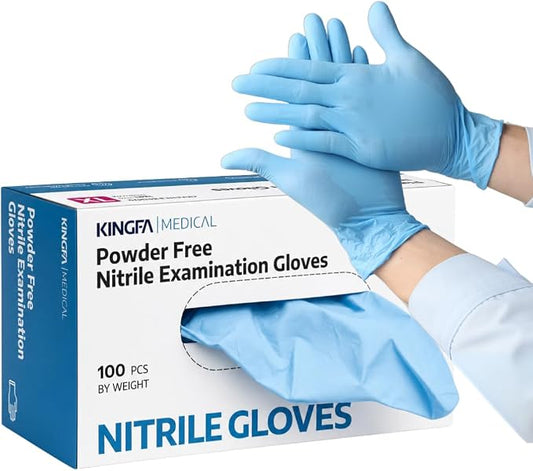
A lighter glove for everyday and detailed work.
Shop Blue Gloves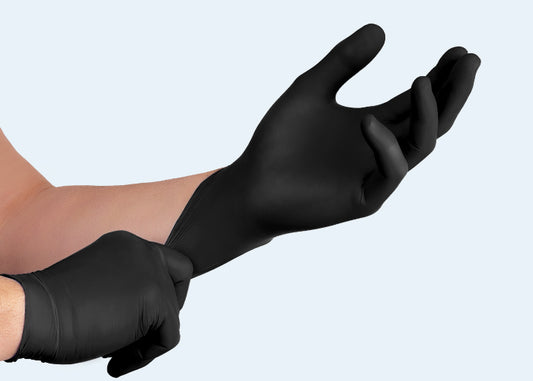
Buying for a team? Choose a 1,000-glove box in blue or black, or book a meeting to talk bulk needs.
Ready to stock up on nitrile gloves?
Shop powder-free, latex-free nitrile gloves, or talk to us about bulk needs for your team.
Frequently Asked Questions
Which is better: nitrile, latex, or vinyl gloves?
It depends on the task. Nitrile suits tasks with oils, sharp edges, or latex allergy concerns. Latex suits fine-touch work where no one has an allergy. Vinyl suits short, low-risk jobs on a budget. Match the glove to the hazard, the time, and the people involved.
Are nitrile gloves better than latex?
Nitrile is better suited to jobs with oils, puncture risk, or latex allergy concerns. Latex is better suited to work that needs the most stretch and touch feel, if no one has a latex allergy.
Are nitrile gloves better than vinyl?
For longer, messier, or higher-risk tasks, nitrile generally holds up better. Vinyl is a lower-cost option for short, low-risk tasks where you change gloves often.
Are latex or vinyl gloves better?
Latex is stronger and fits better but can trigger allergies. Vinyl has no latex and costs less, but it is looser and less durable. If allergies are a concern, choose vinyl or nitrile.
Are nitrile gloves latex-free? Can I use them with a latex allergy?
Yes. Nitrile gloves are made without natural rubber latex, and the FDA lists nitrile as an option for people with a latex allergy. A few people react to chemicals used to make nitrile gloves, though. If you get a rash, talk to a doctor.
Which gloves are used for food handling?
Nitrile and vinyl are both common. Nitrile handles raw meat and greasy foods well. Vinyl suits short, low-risk tasks with ready-to-eat foods. Latex is often avoided because of allergies. Use gloves labeled for food contact, and wash your hands first.
Which gloves are used for cleaning?
Nitrile is commonly used for disinfectants, grease, and heavy cleaning. Vinyl suits light wiping. Latex can wear down with oils and many cleaners. Check the cleaner's label for glove advice.
Are vinyl gloves safe for medical use?
Vinyl exam gloves exist and suit very short, low-risk contact. They stretch less and can fail more easily under stress, so many healthcare settings choose nitrile for longer or riskier tasks. Always use gloves labeled for exam use.
Are nitrile gloves chemical resistant?
Nitrile resists oils and greases and many other substances, but not every chemical. Results depend on the exact glove, thickness, chemical, and contact time. Check the glove maker's chemical data and the safety data sheet before use.
Can you wash and reuse disposable gloves?
No. The FDA says never to wash, disinfect, or reuse medical gloves. Use a fresh pair for each task and throw them away afterward.
Written by the Hakeem PPE Team.